NIKKEI
Restaurant
Location:
Playas del Coco-Guanacaste
Project: Design and Constructive plans
Area: 840 m2
Year : 2025
Lead Architects:
32 South Architecture
Architectural Visualization: Imminent Studio
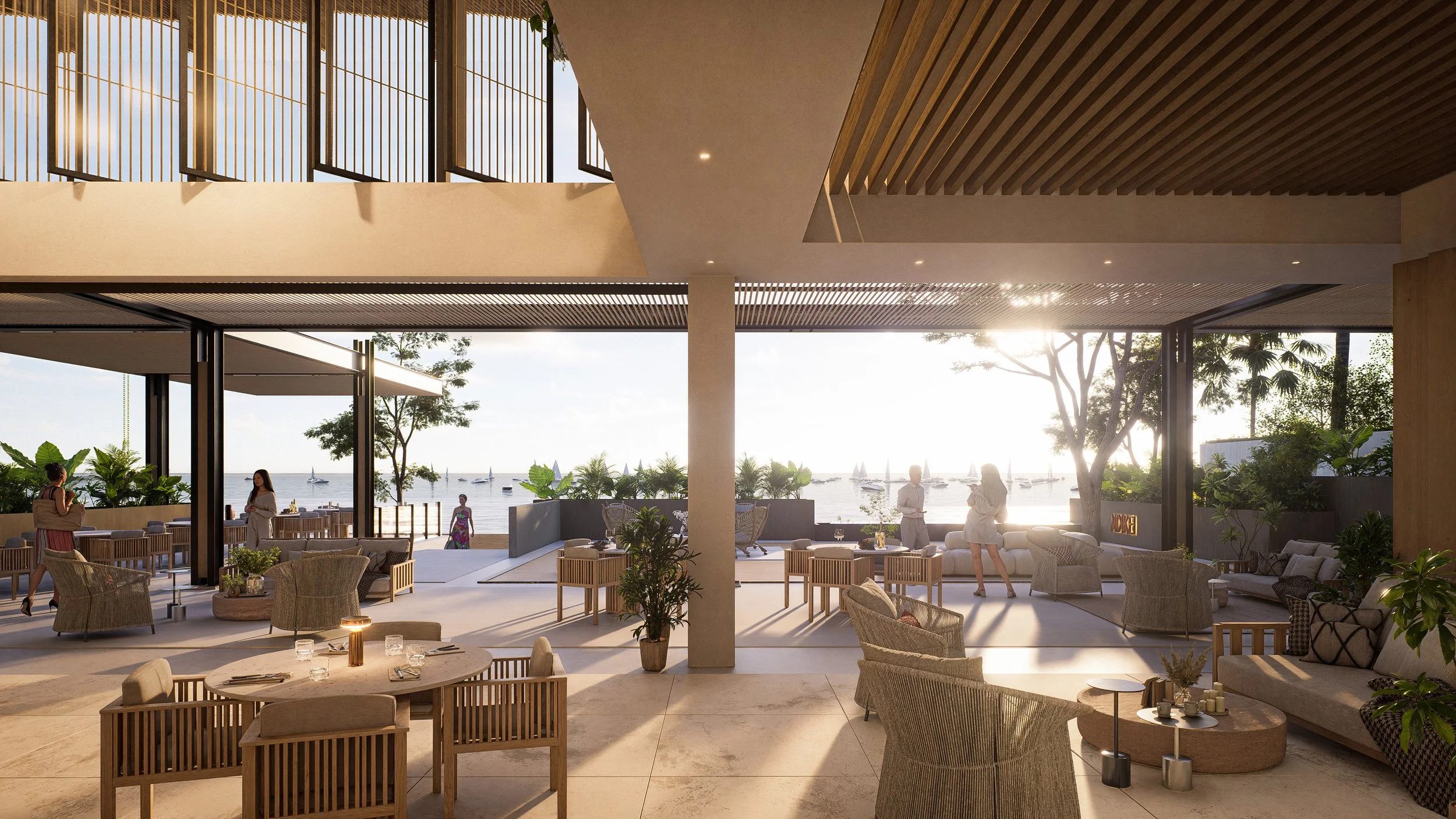
At a corner where the town meets the sea, the project creates a conciliatory architecture between the urban rhythm of Calle La Chorrera and the calm openness of the Pacific horizon..
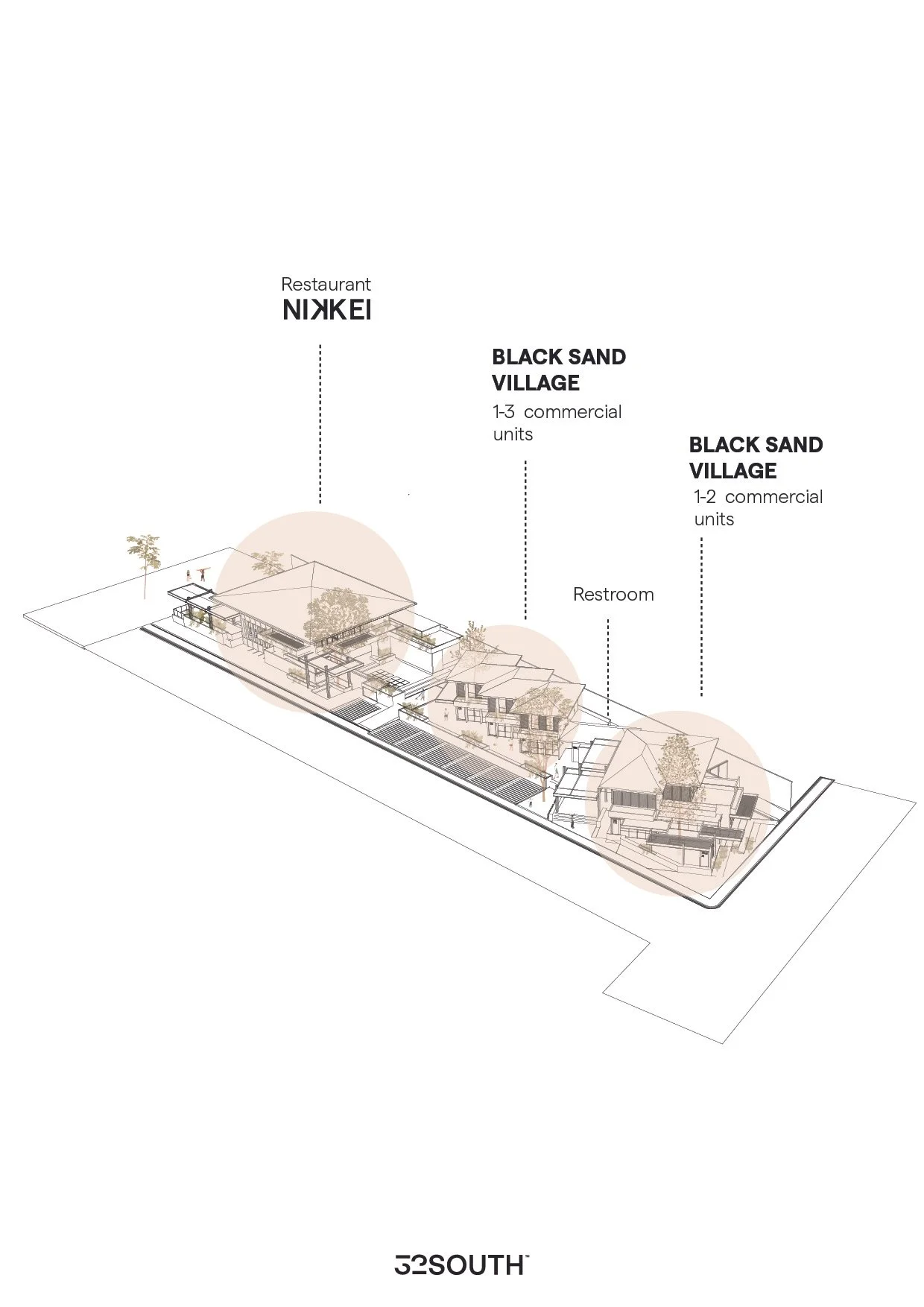
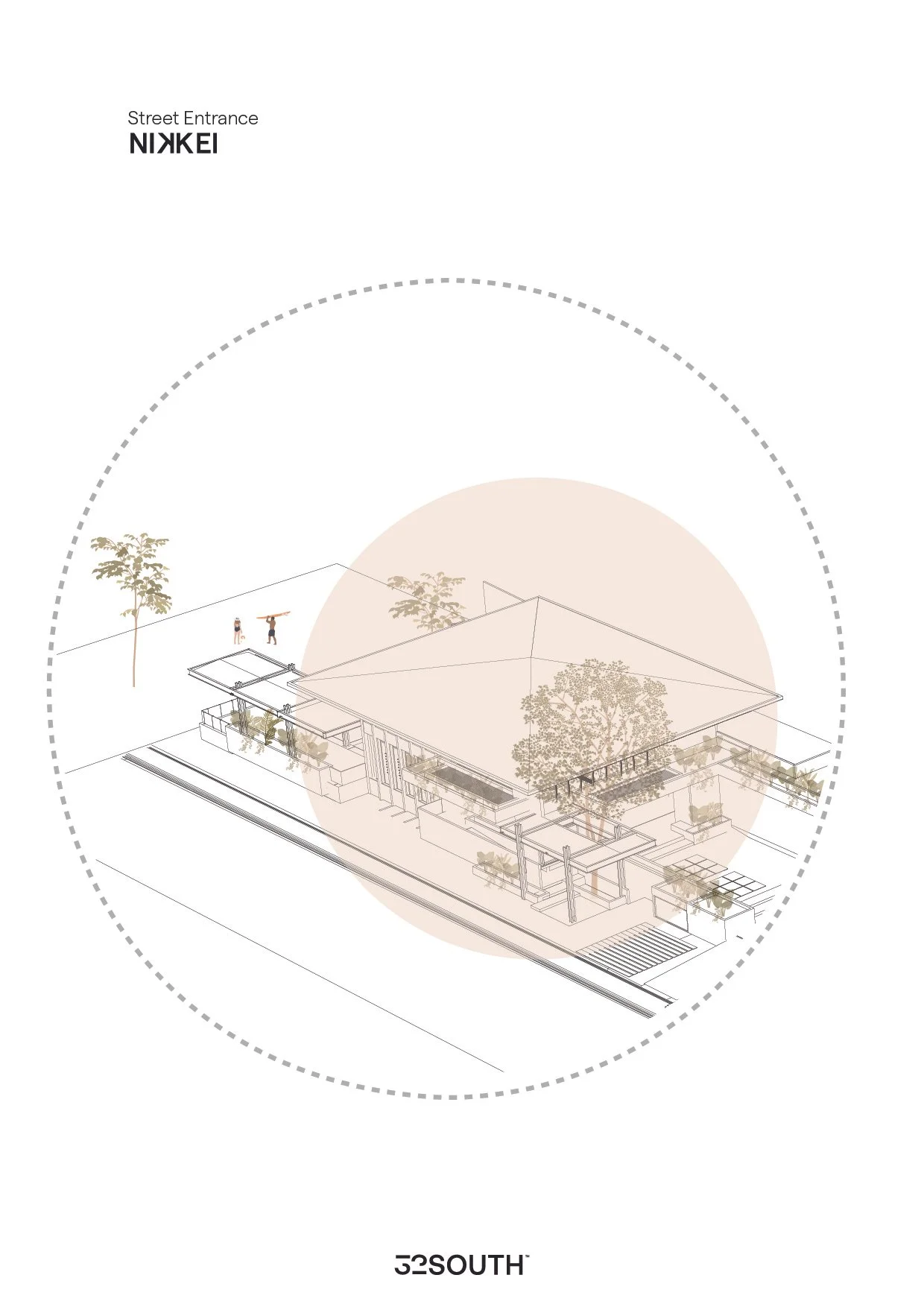
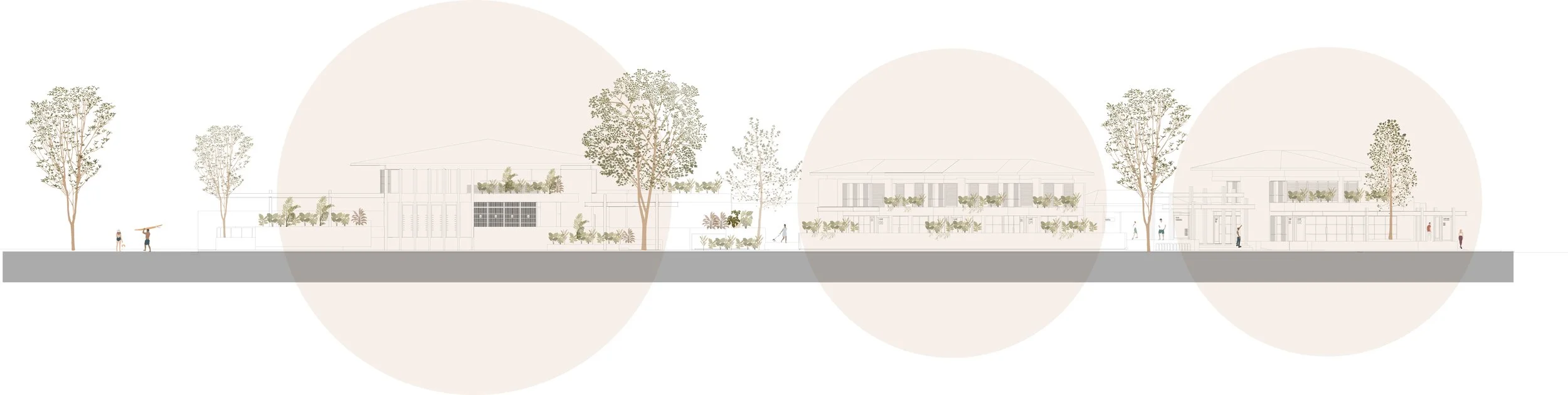
A sequence of small-scale commercial spaces leads to a plaza that connects the street to the beach, culminating in a restaurant that celebrates shade, vegetation, and sea breeze.
A Nikkei and fusion restaurant in every sense — tradition and innovation, respect and curiosity.
Principles that guide every design decision, from structure to atmosphere..
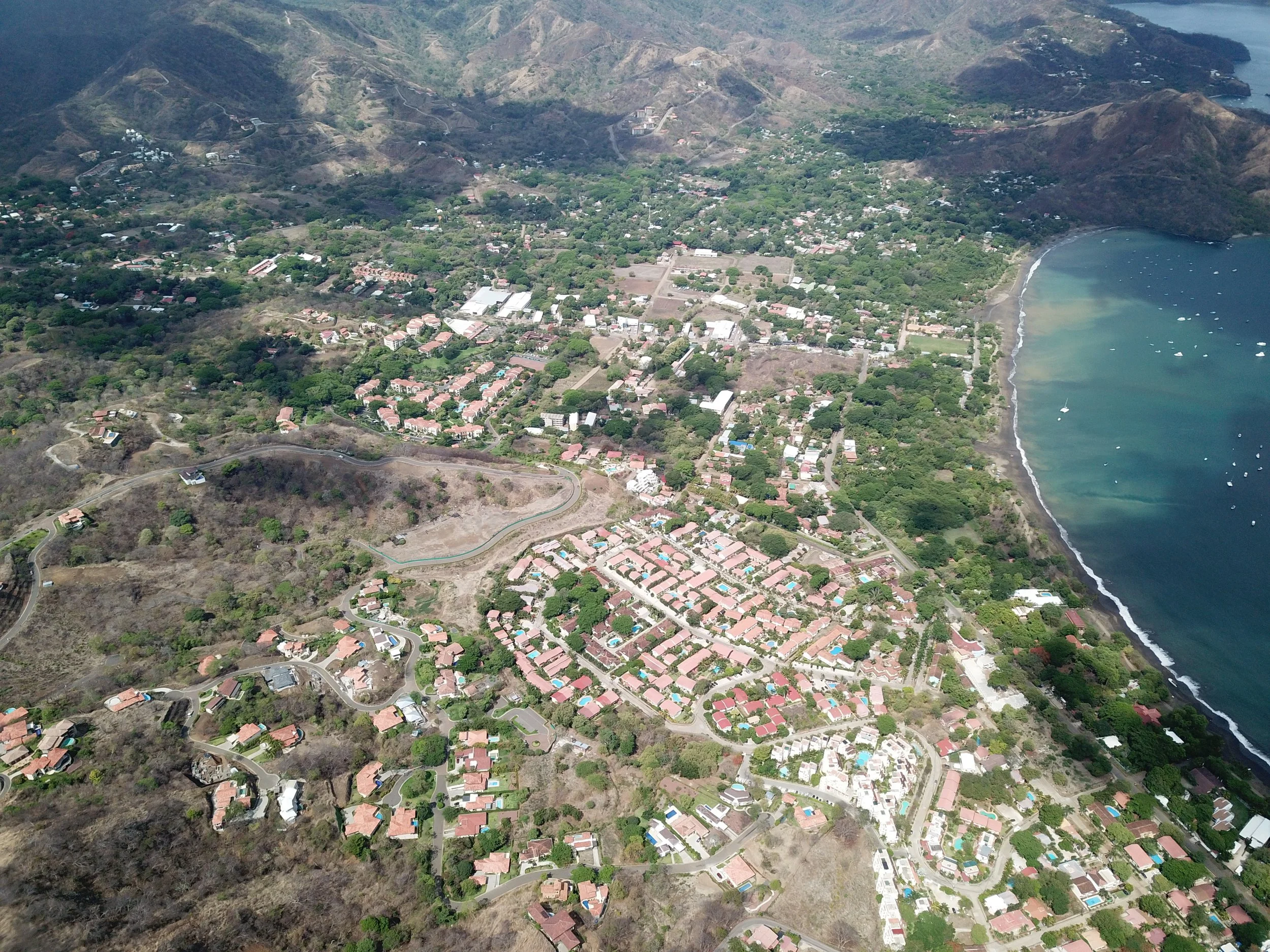
This dual condition —urban and coastal— defines the project’s conceptual nature: a conciliatory and dual architecture that mediates between the energy of a developing commercial corridor and the calm horizon of the sea.
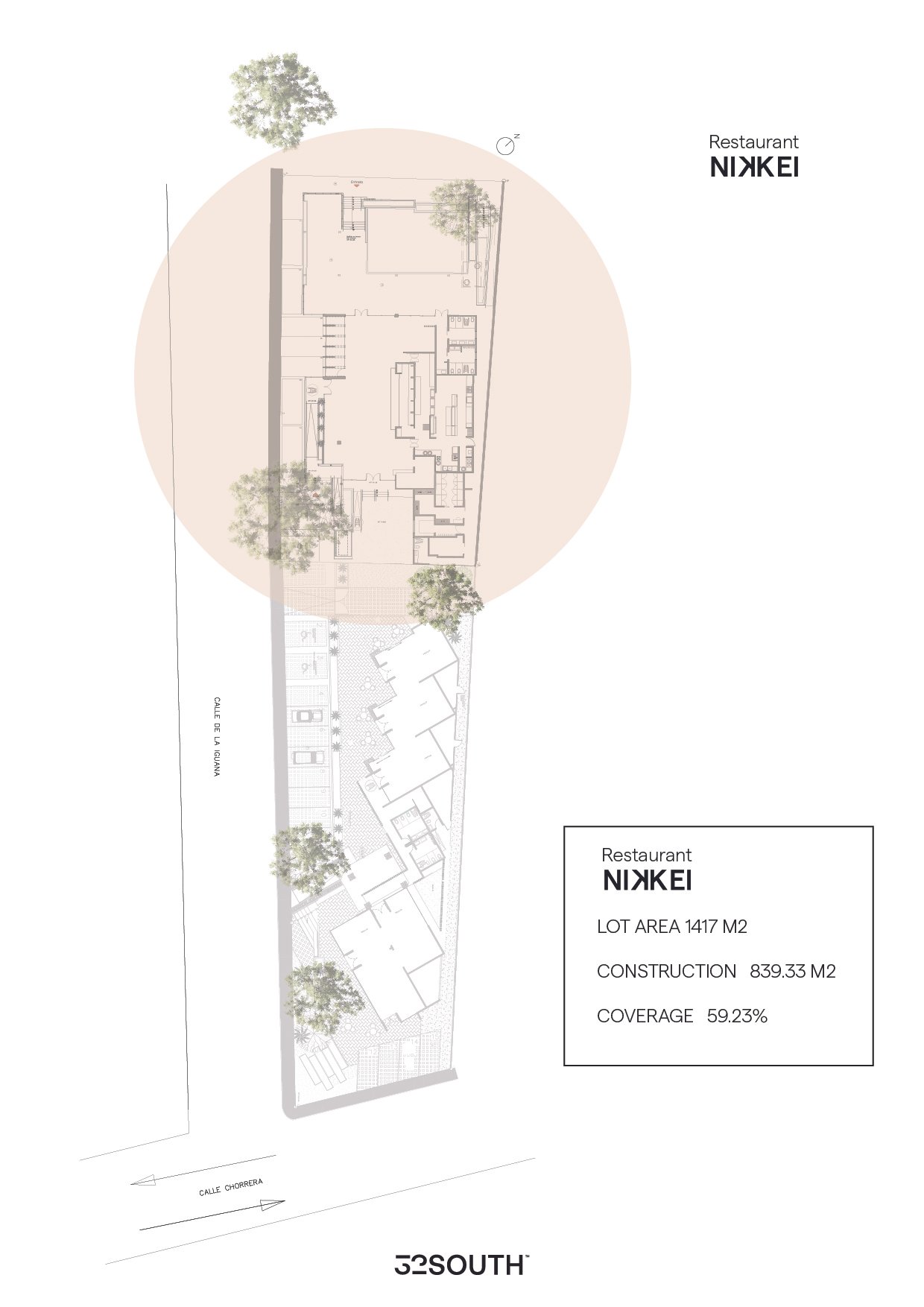
Located on a long corner lot in Playas del Coco, the project emerges at the meeting point between two distinct realities: the growing urban fabric of Calle La Chorrera and the vast, open expanse of the Pacific Ocean.
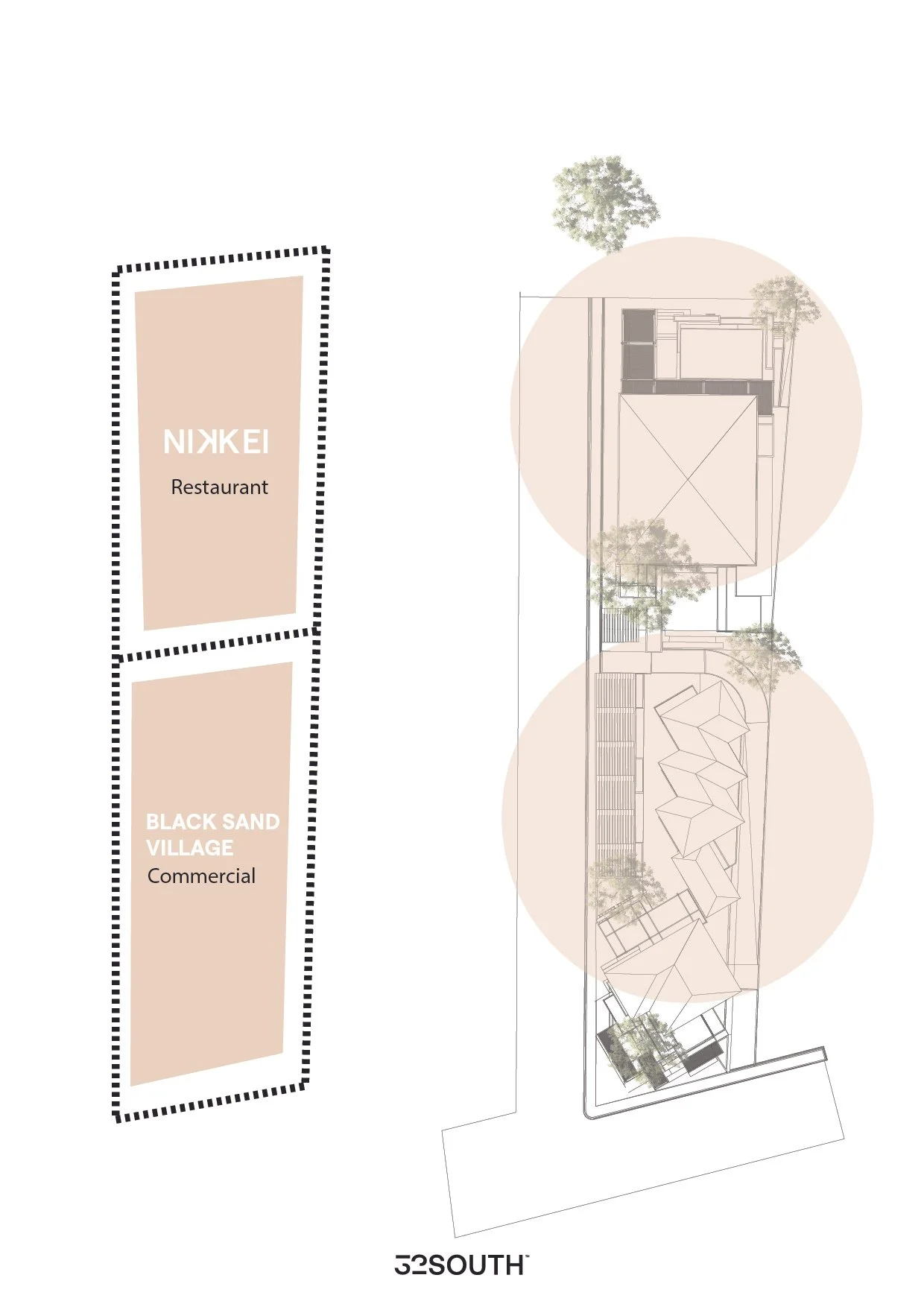
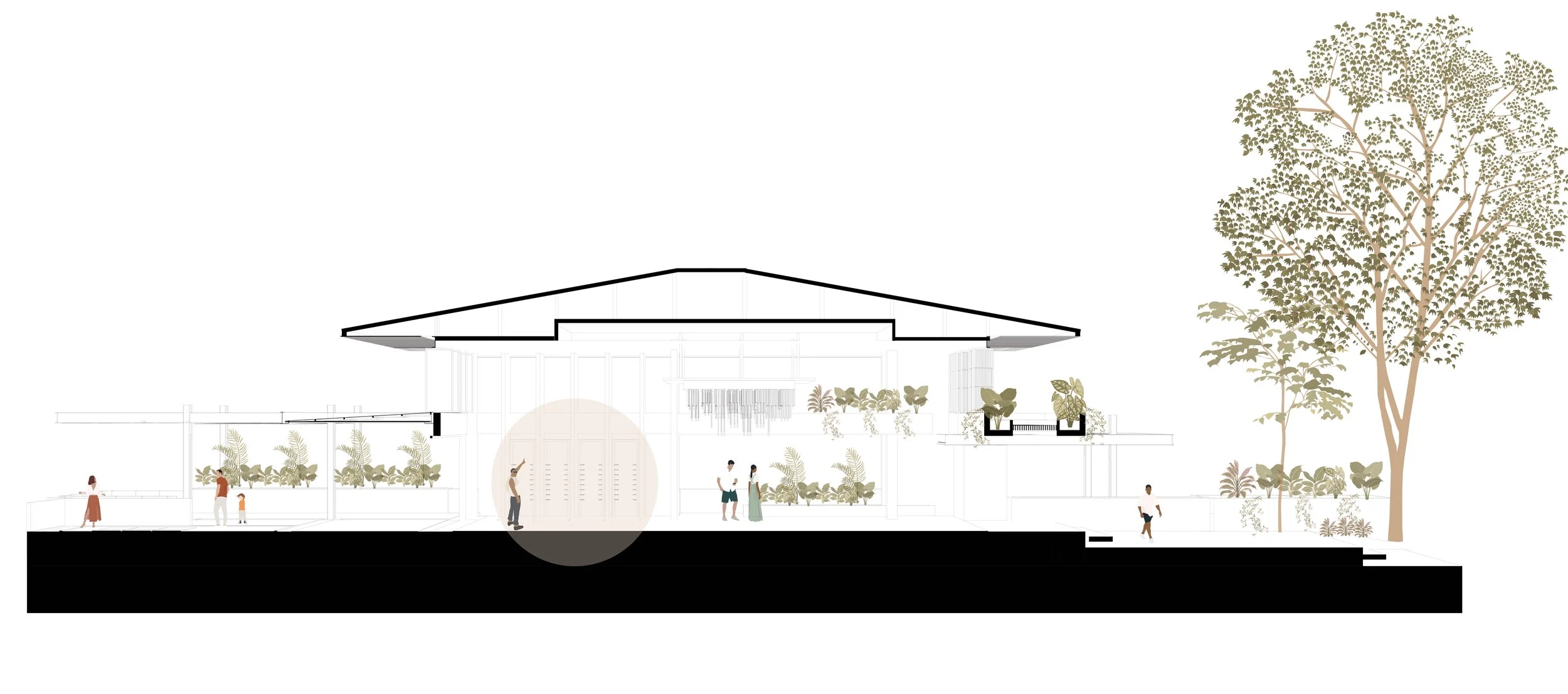
Facing the street, a series of small-scale commercial spaces adopts a language consistent with the surrounding residential fabric —pitched clay-tile roofs and simple volumes arranged along a long, open plaza that connects the town to the beach.
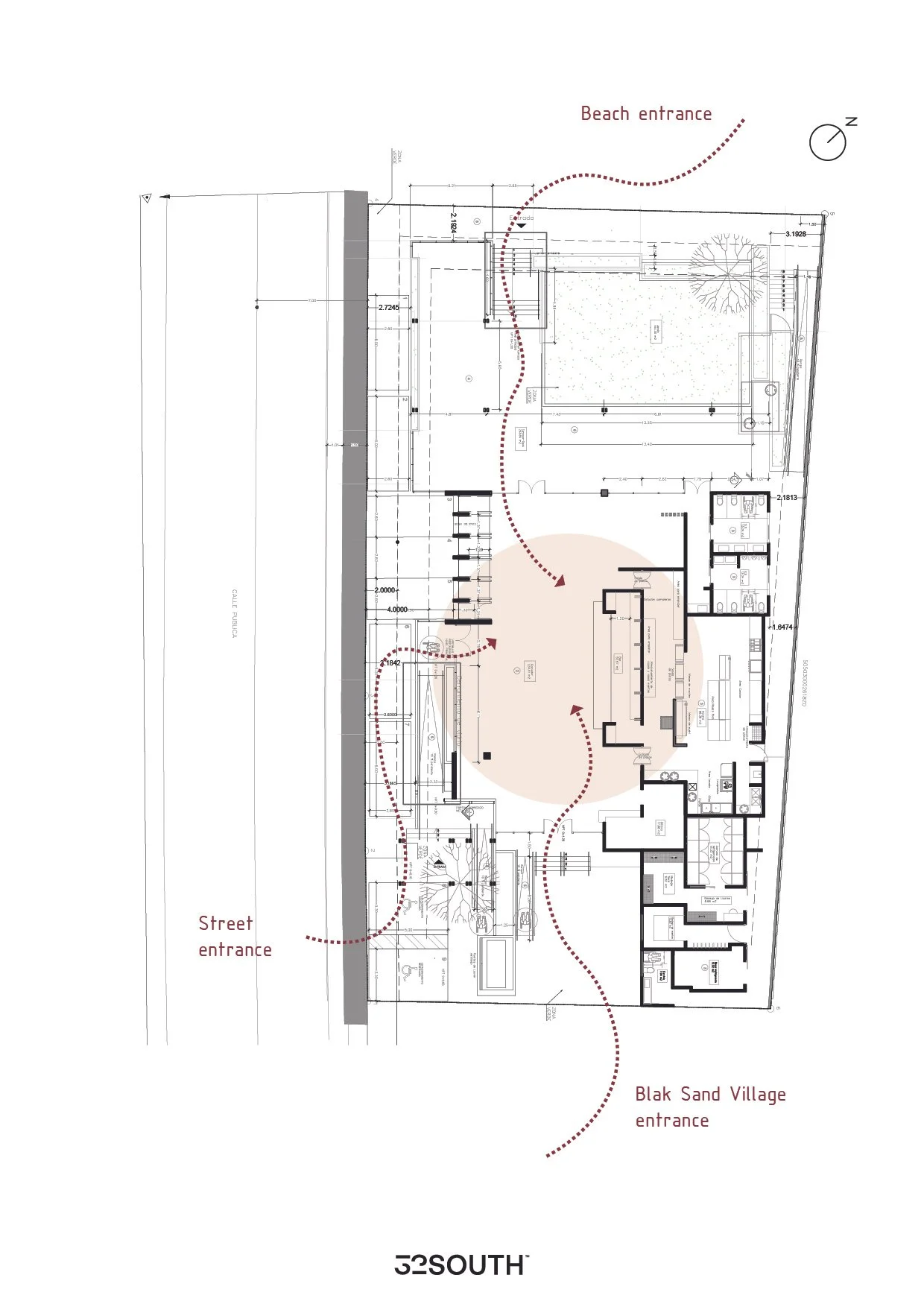
A pergola and two existing trees mark the entrance, guiding visitors along a slow, shaded path through the site.
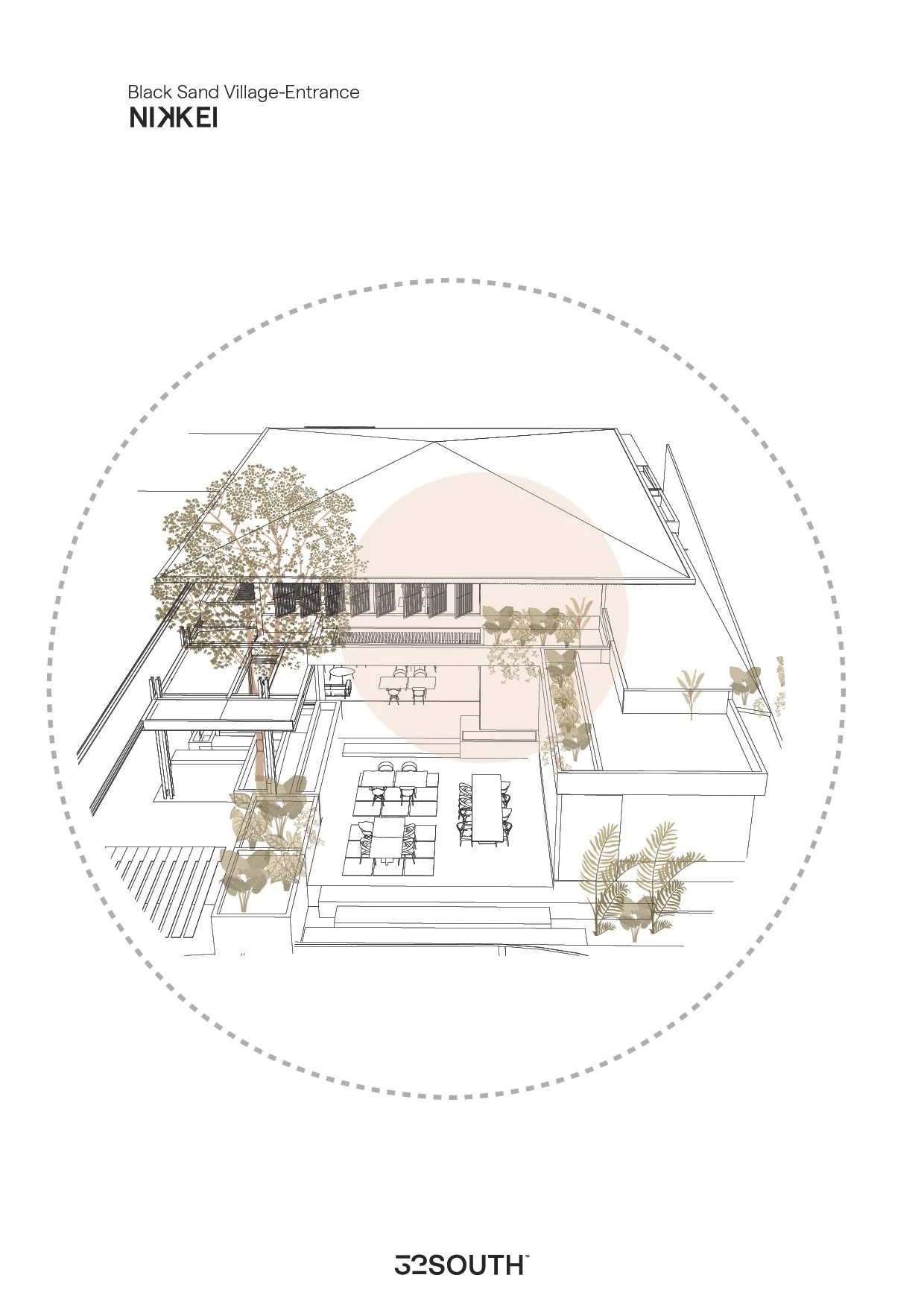
At the midpoint, an open garden preserves the existing Guanacaste tree, creating a moment of pause between the built and the natural before arriving at the restaurant by the sea —the second and most expressive component of the program.
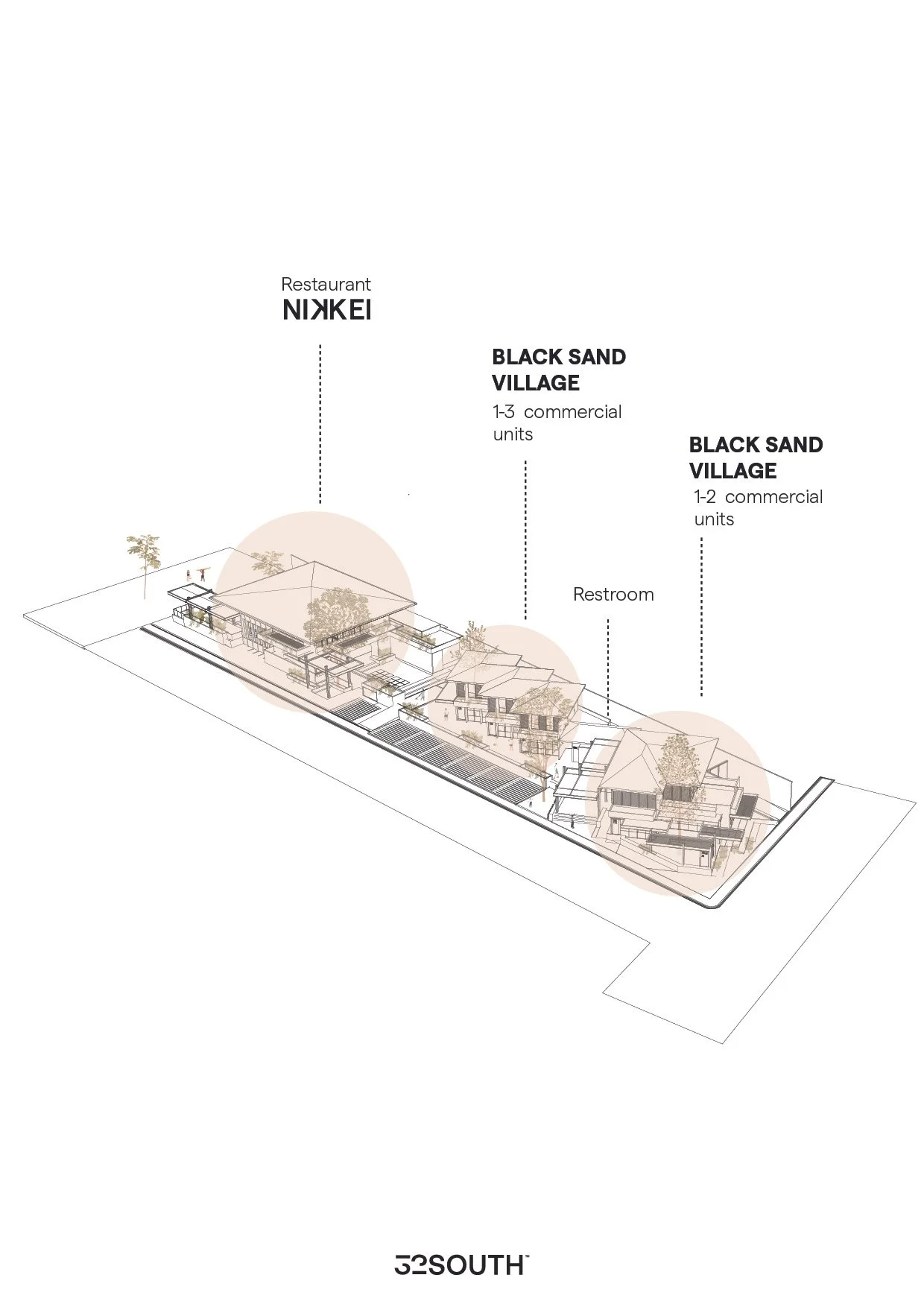
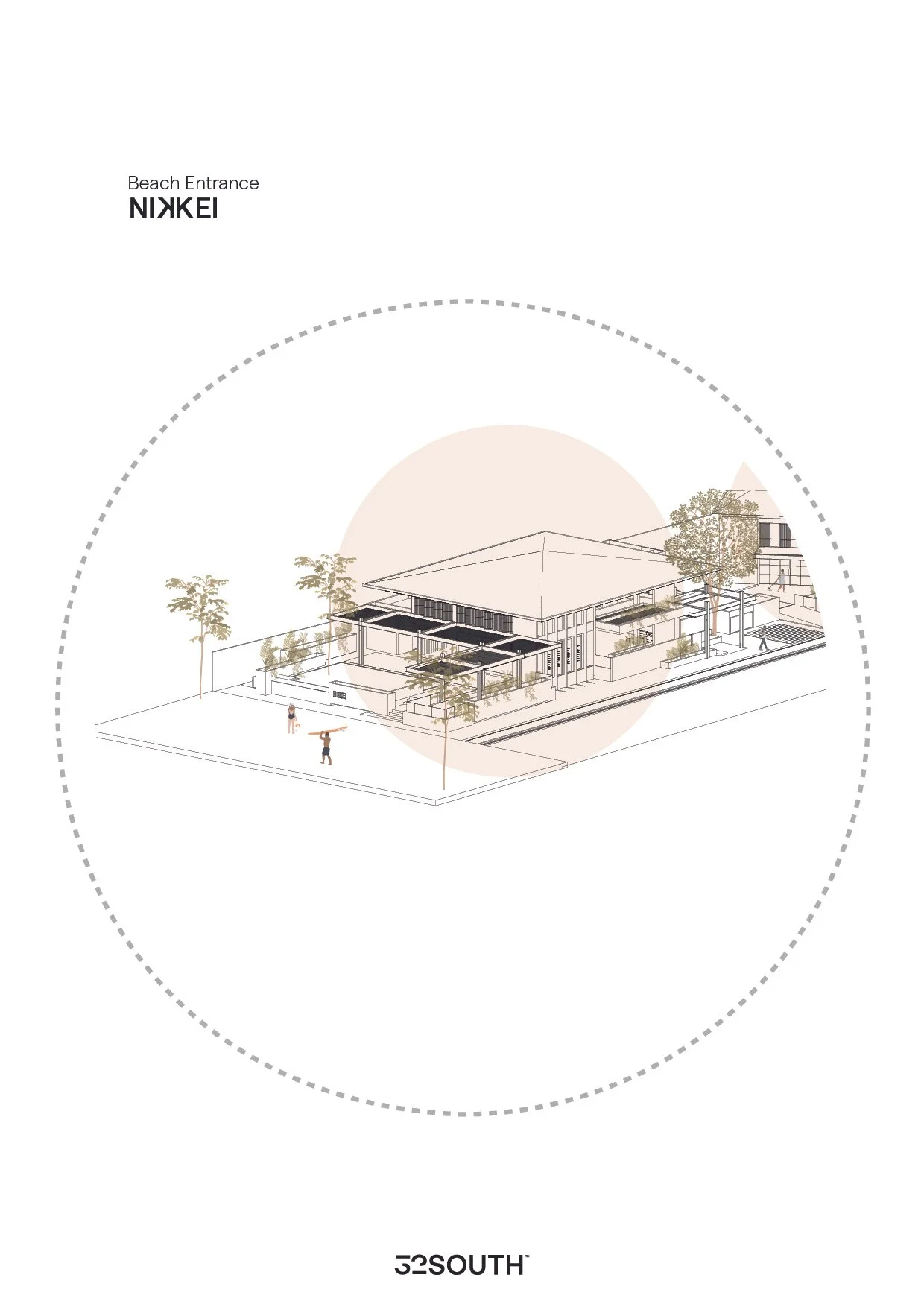
The restaurant continues the architectural rhythm of the commercial spaces yet transforms it to embrace its new, contemplative condition.
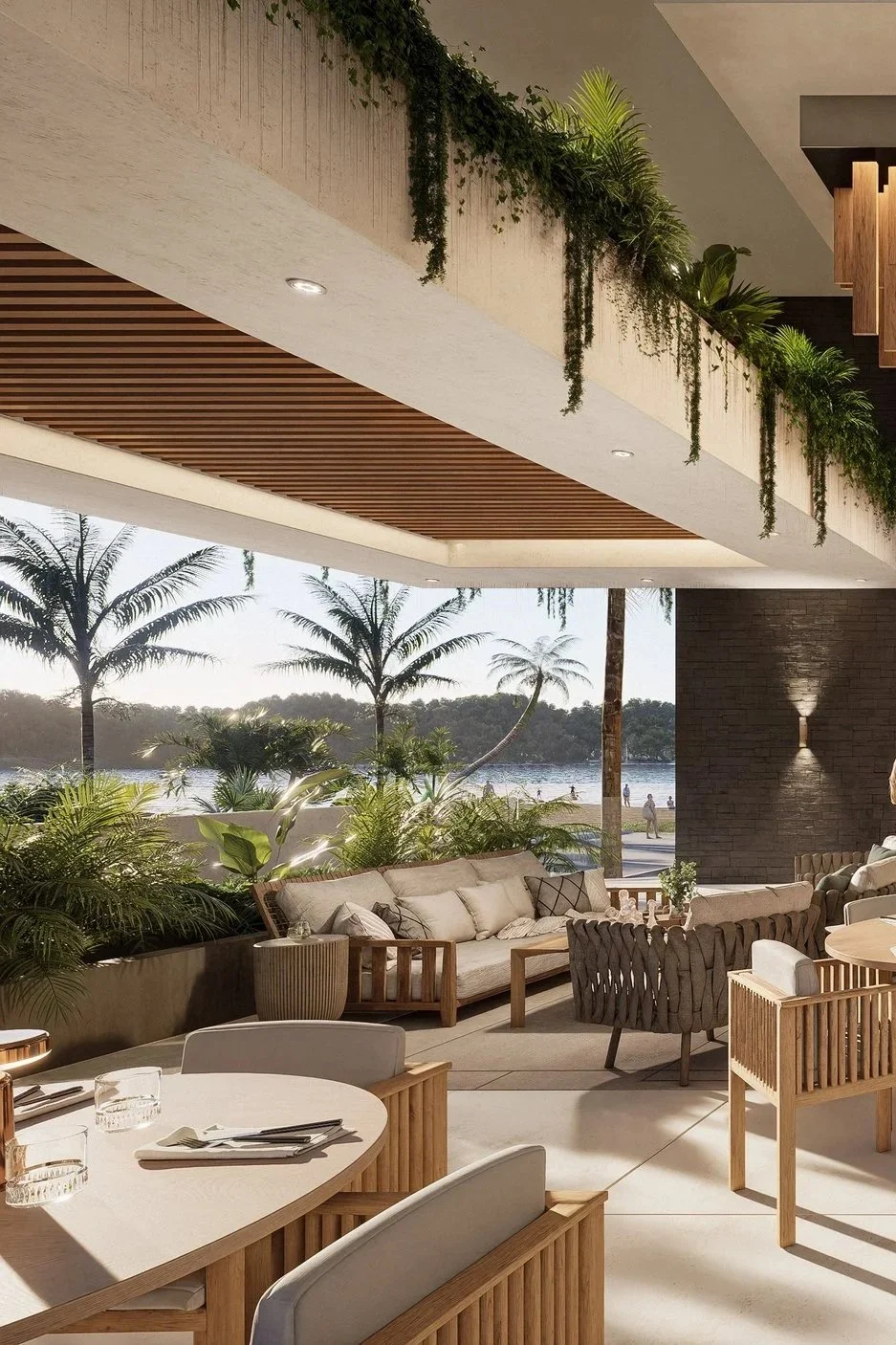
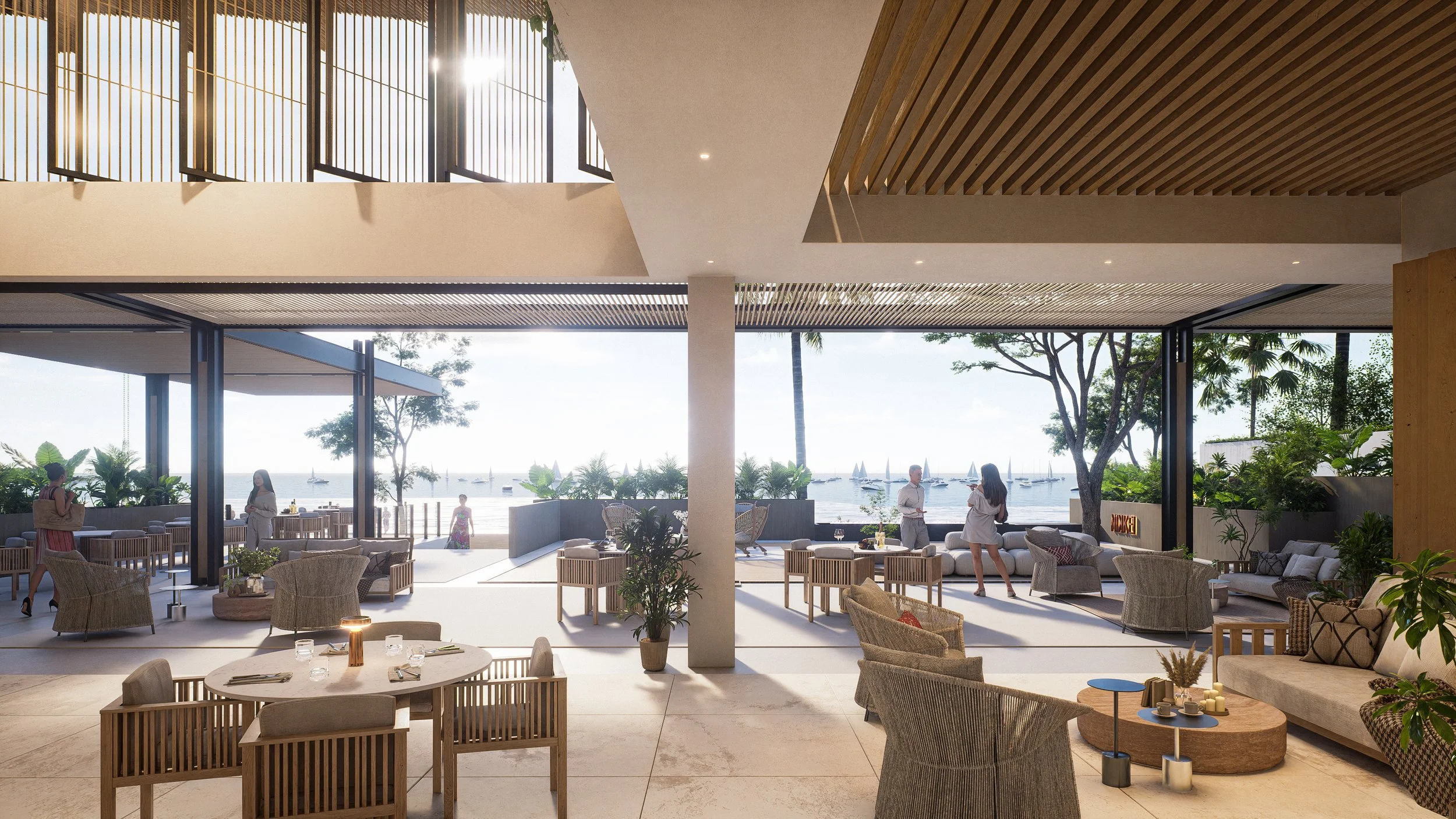
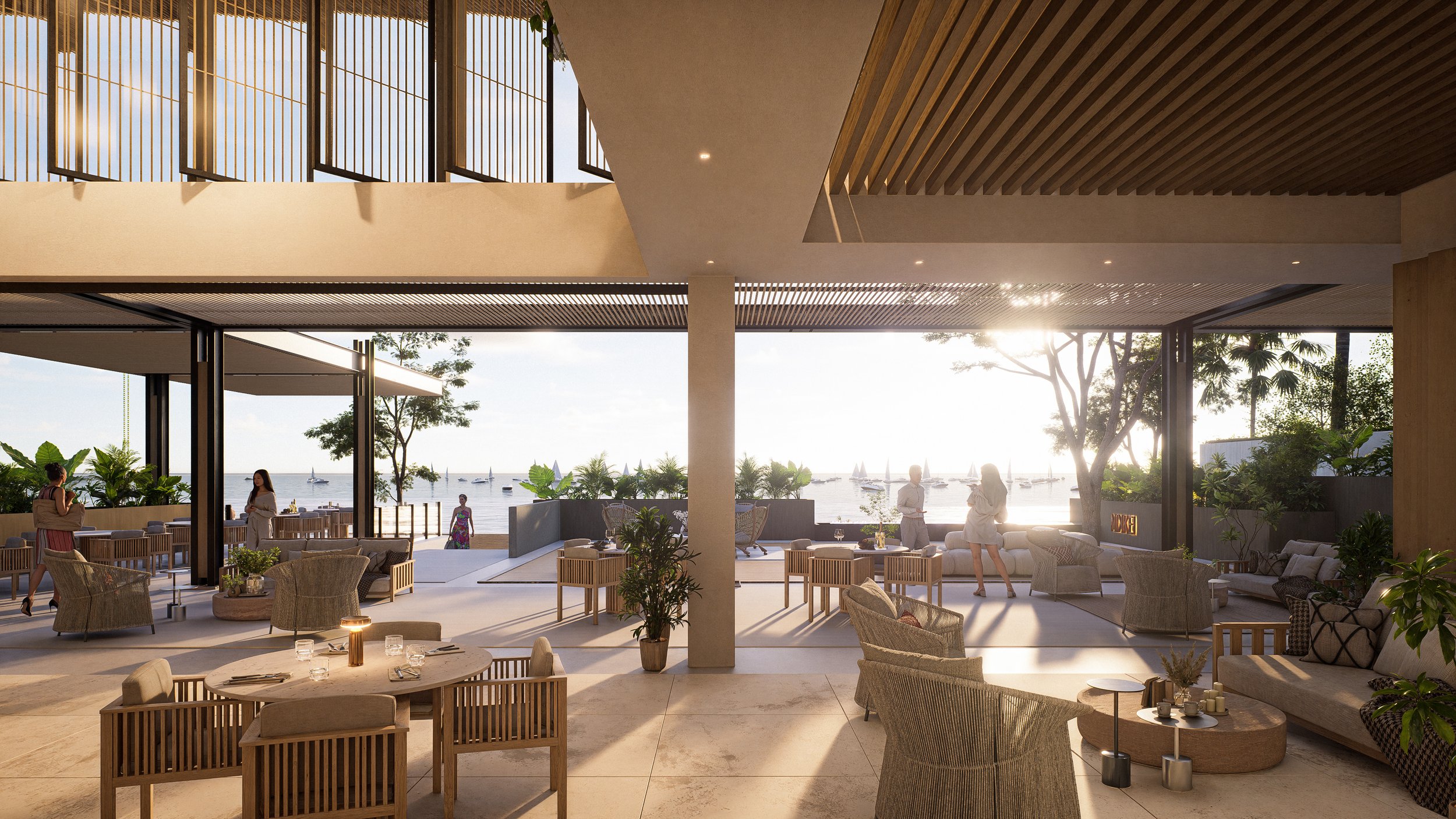
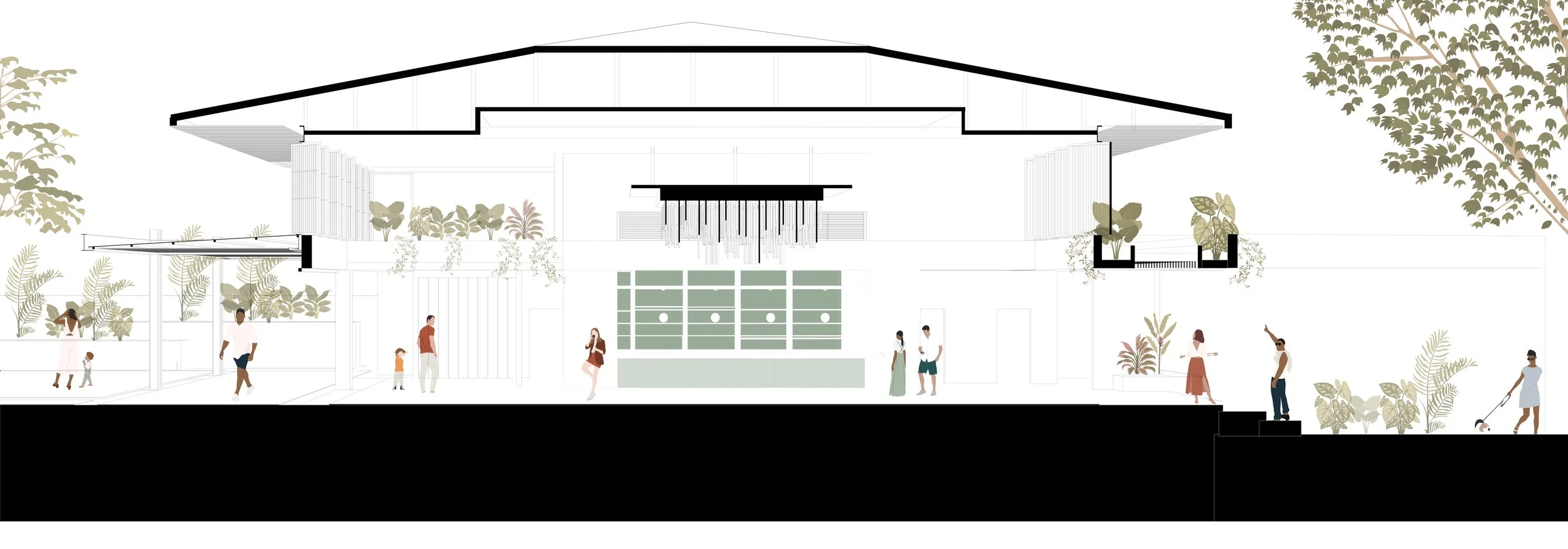
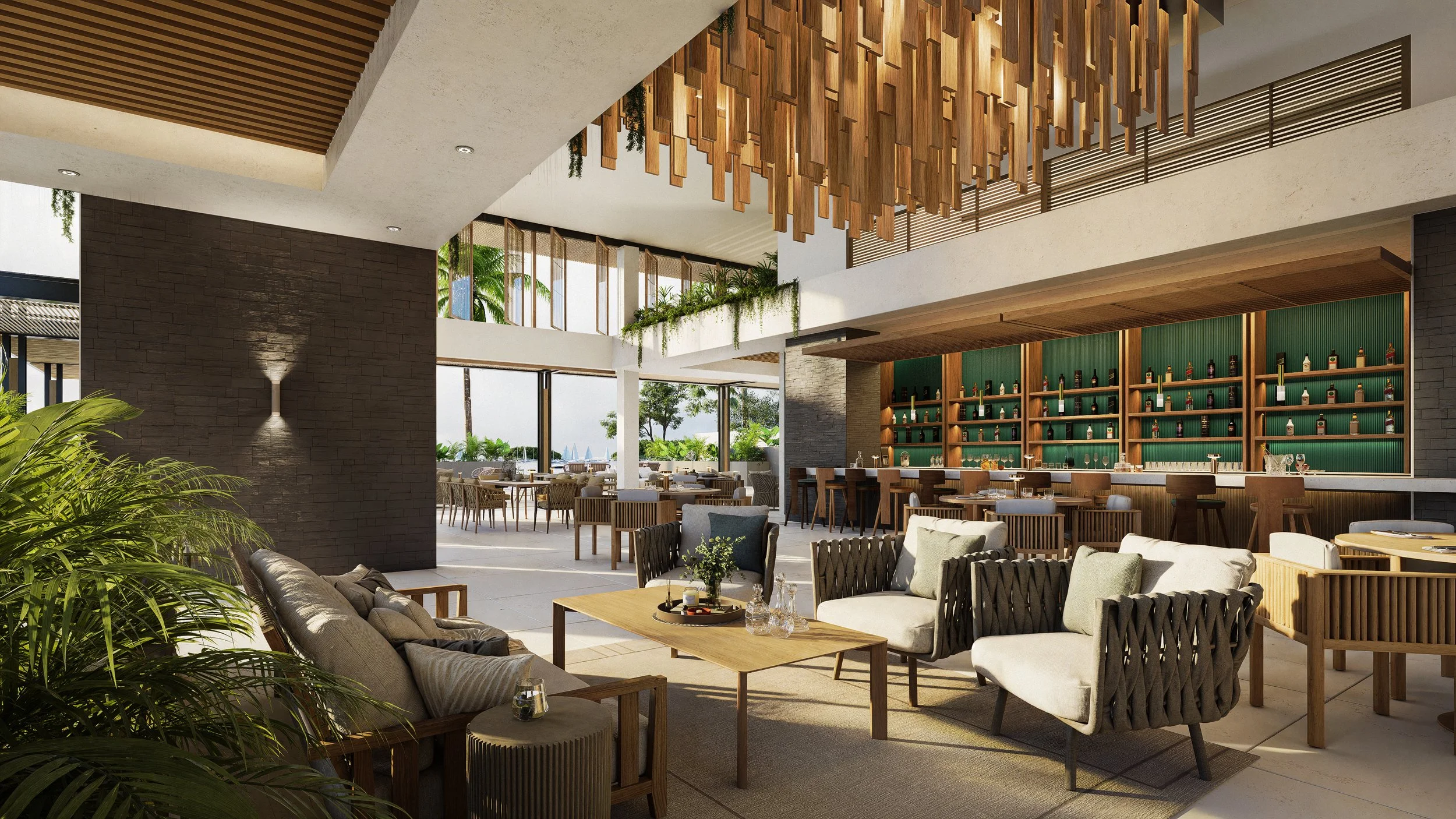
It unfolds through layers of light, vegetation, and shade, where limits are defined not by walls but by textures and air.
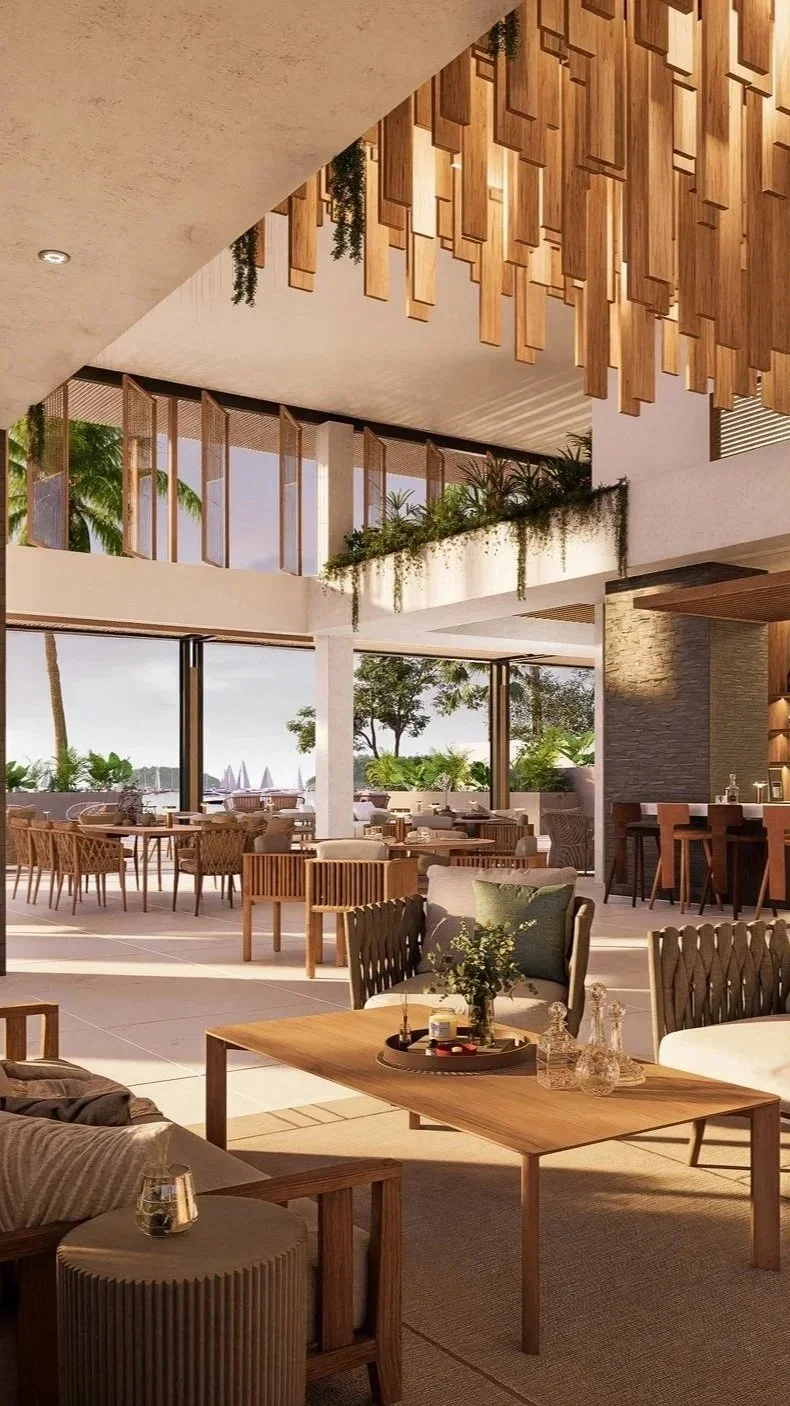
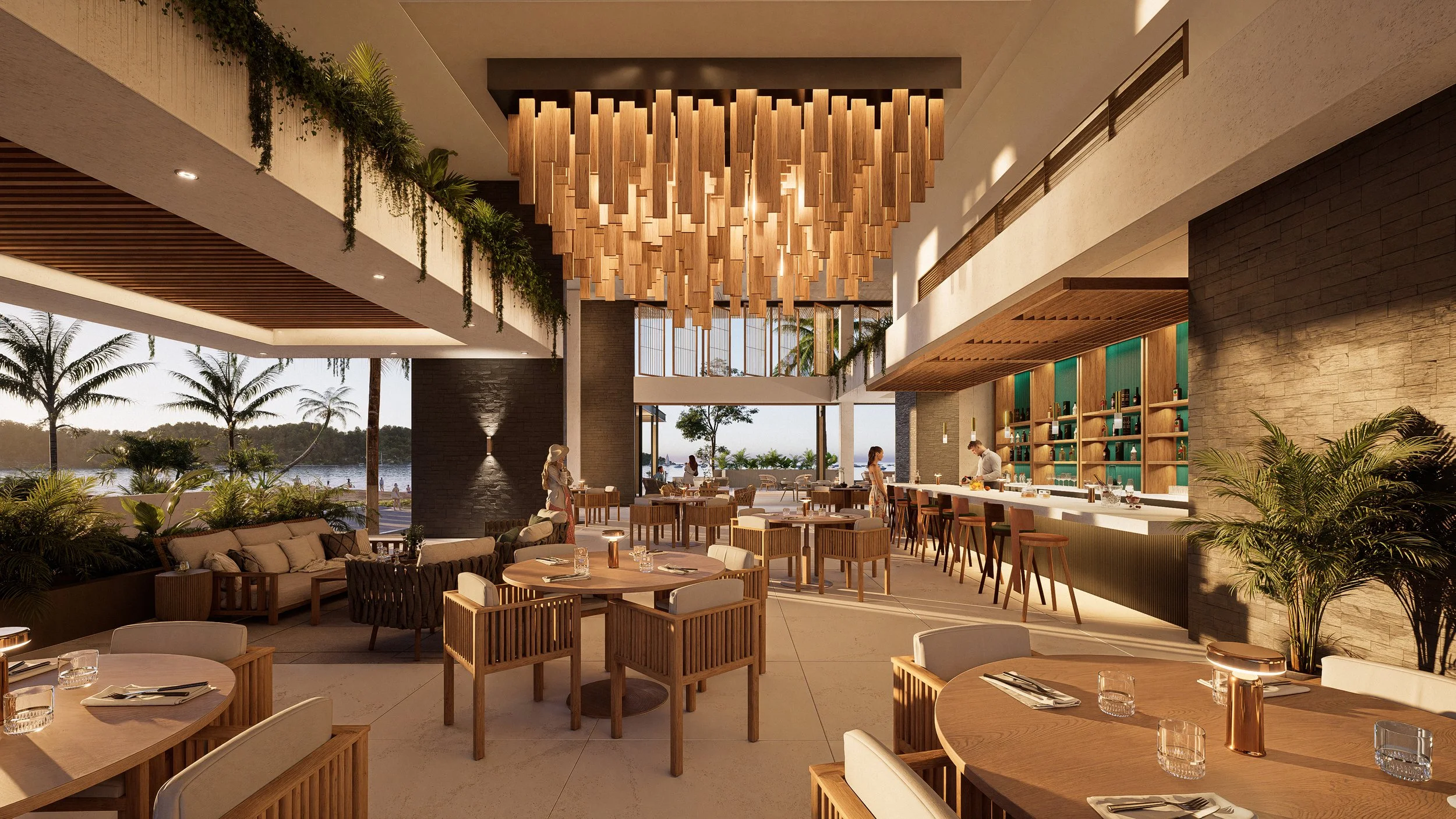
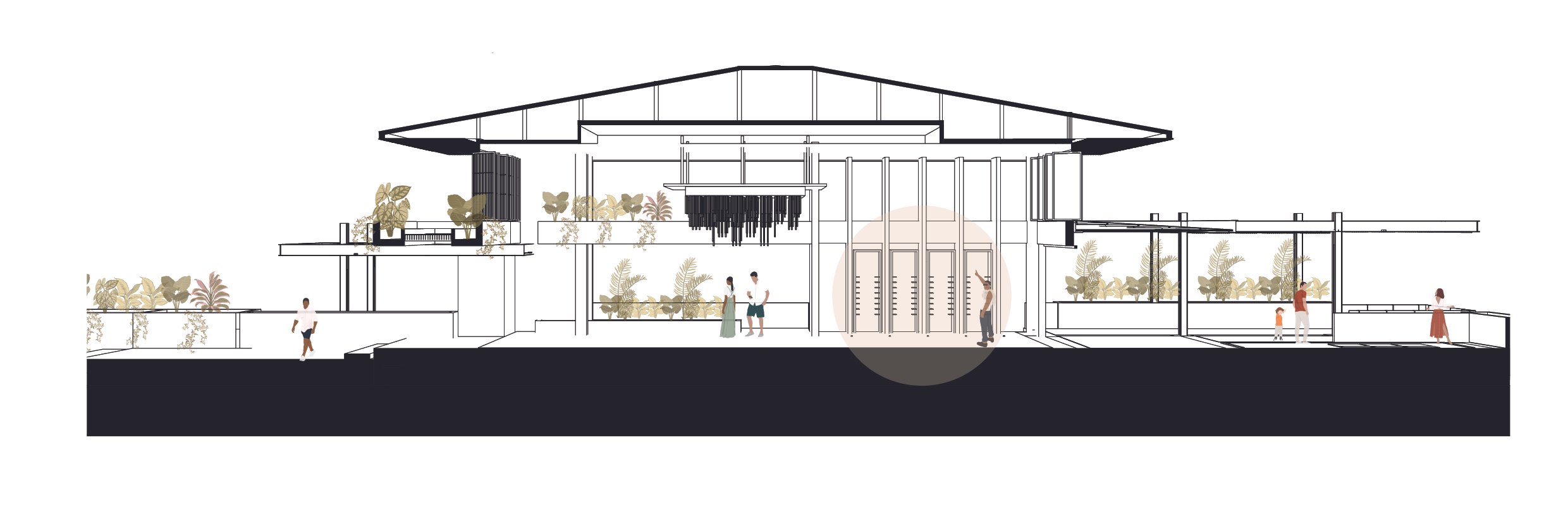
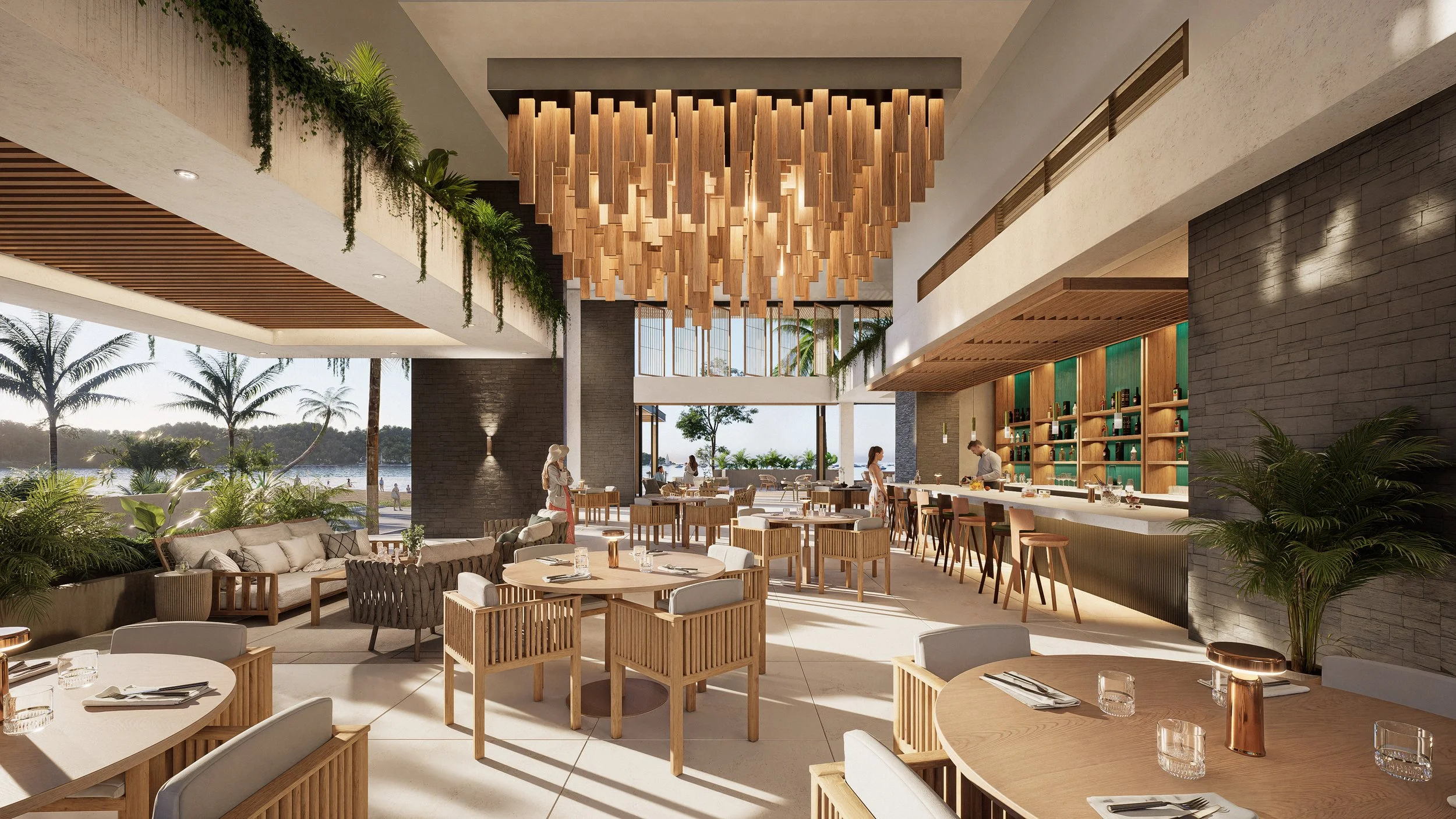
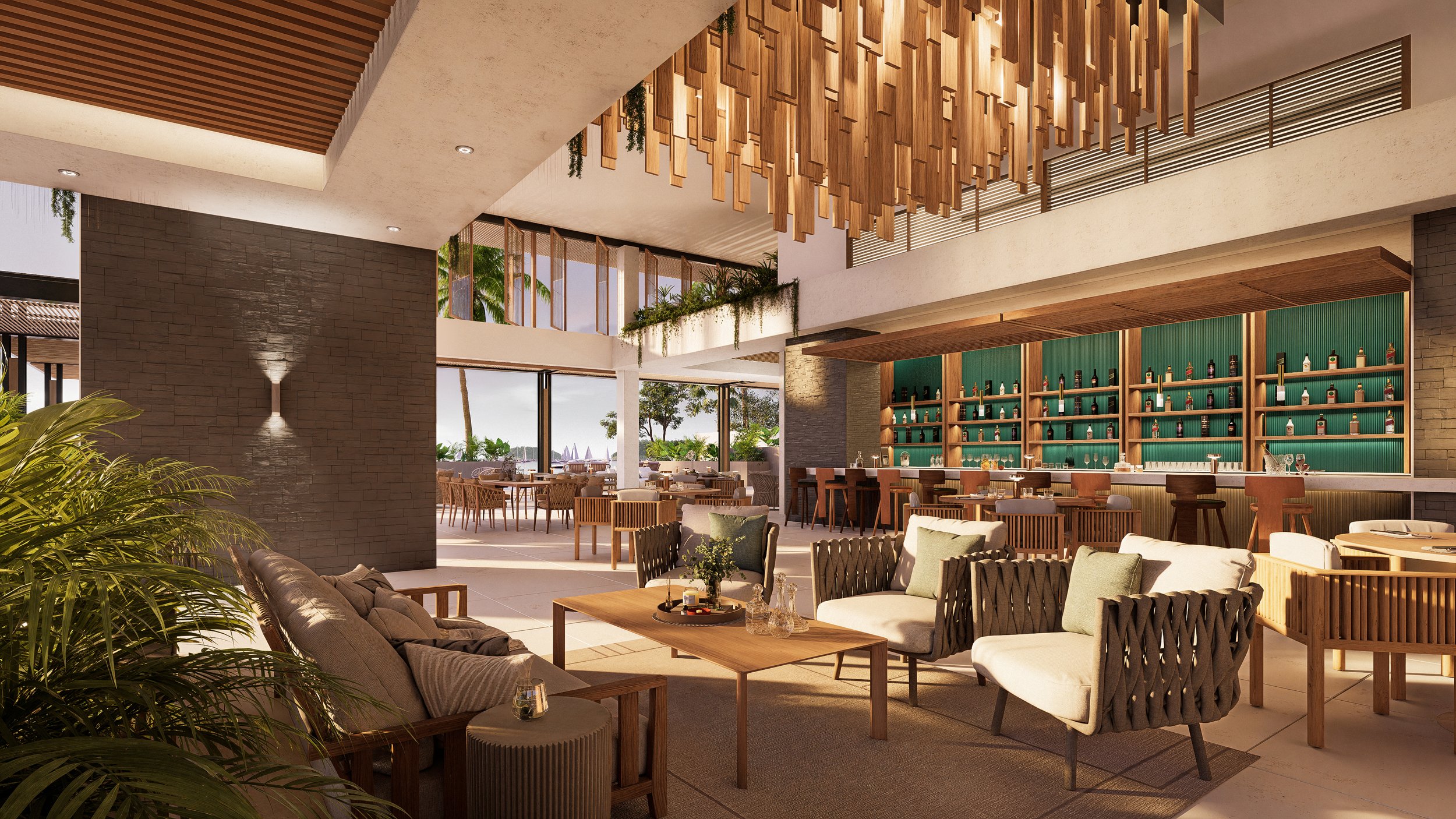
Pivoting wooden louvers filter the sea breeze and daylight, while planters and suspended vegetation create a soft sense of enclosure and scale within the double-height dining space. A firm yet fragmented concrete structure supports the open plan, freeing long spans that frame uninterrupted views of the ocean.
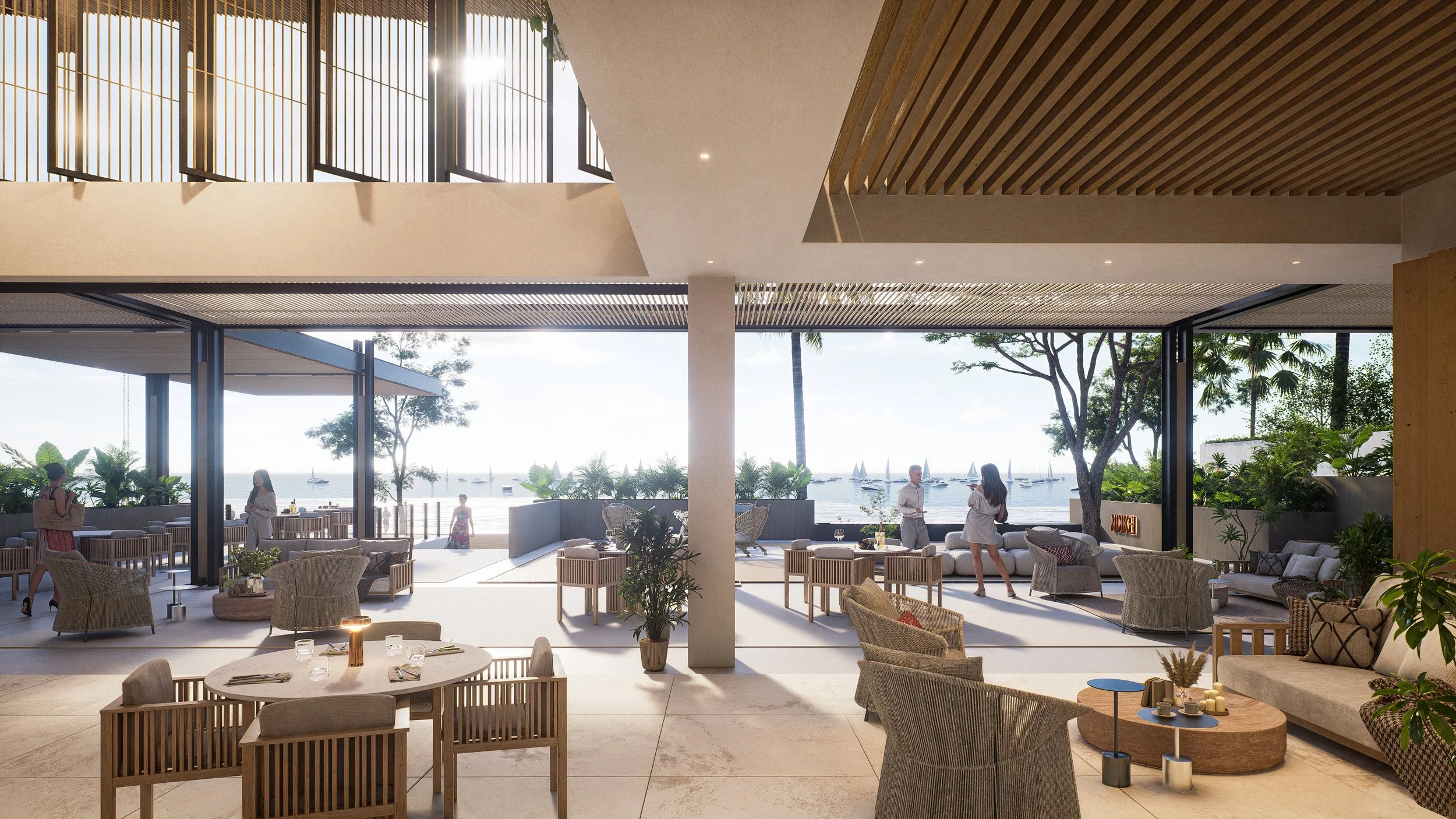
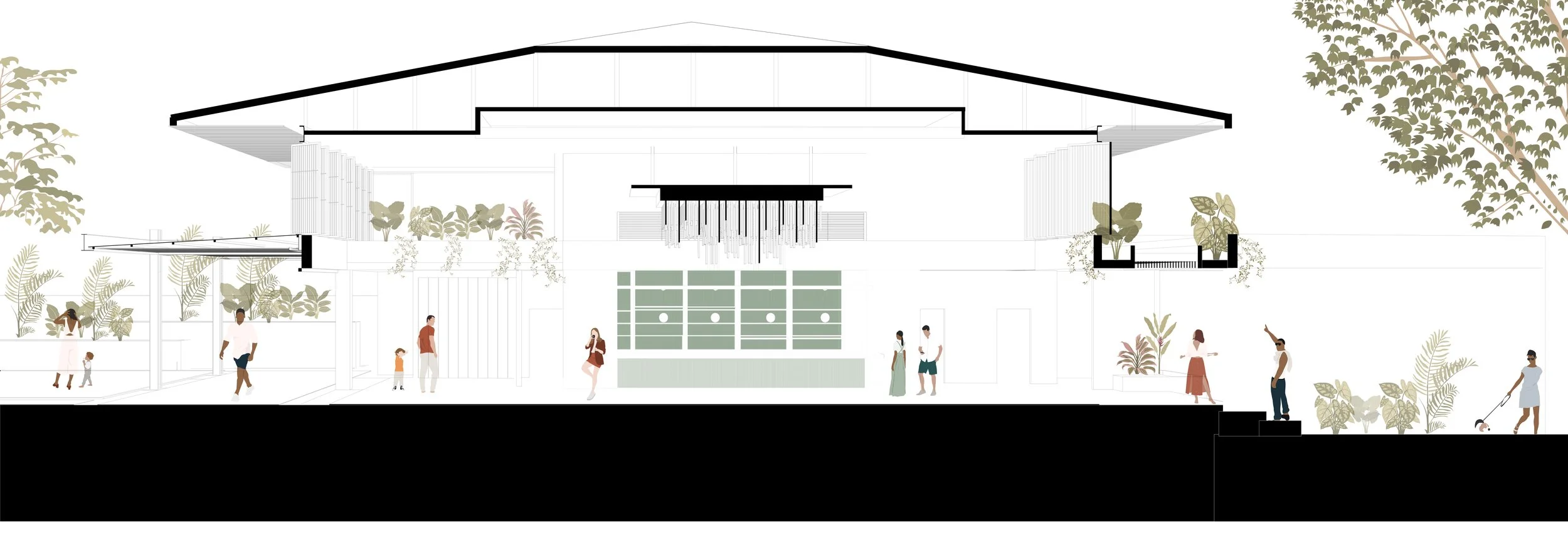
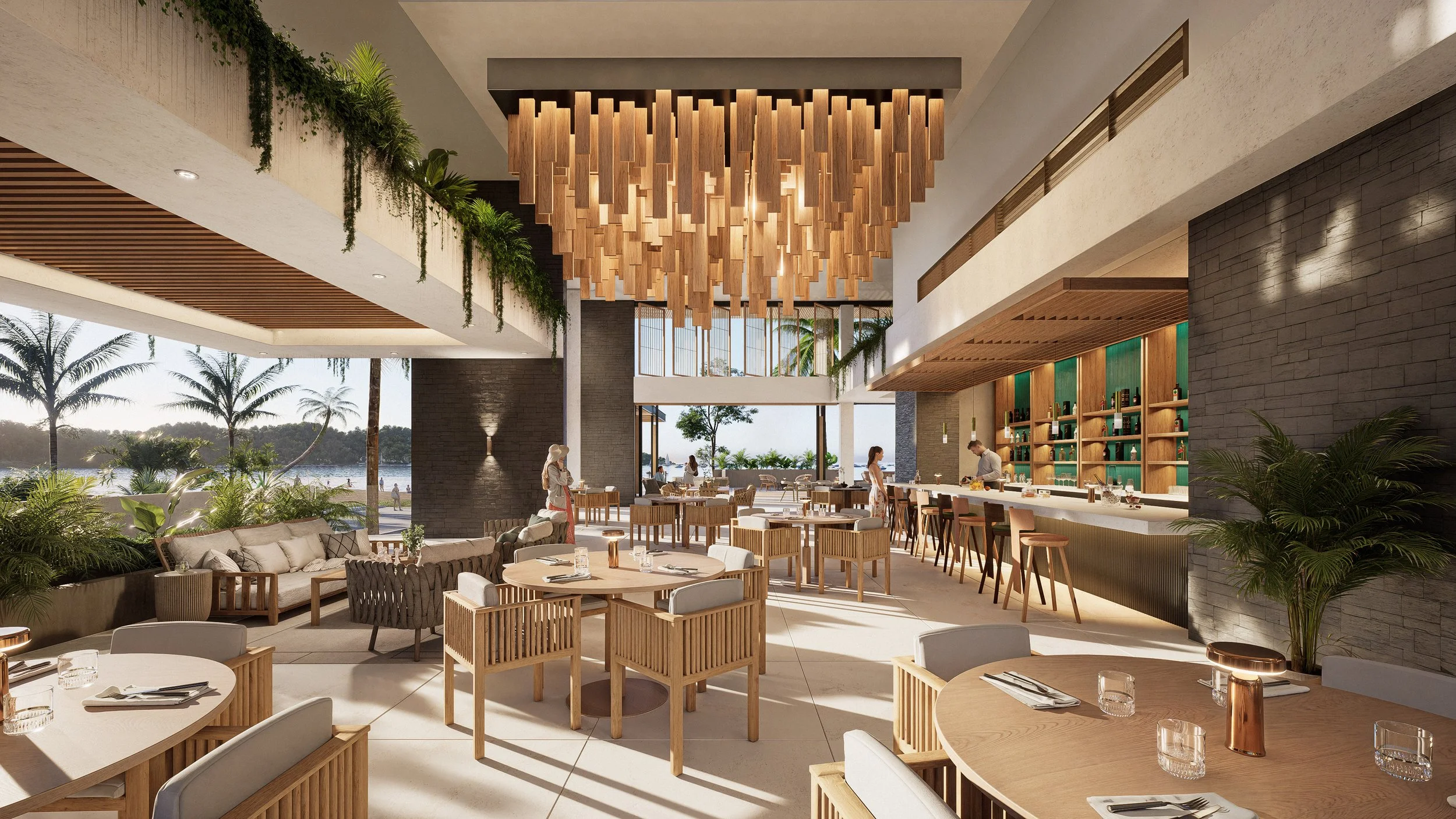
Architecture, structure, and lighting work as a single system —eliminating the need for ornament. During the day, the space is built through shadow and vegetation; at night, a central pendant light crafted from reused formwork wood tells the story of its own making, reflecting the spirit of the place and the cuisine it houses.
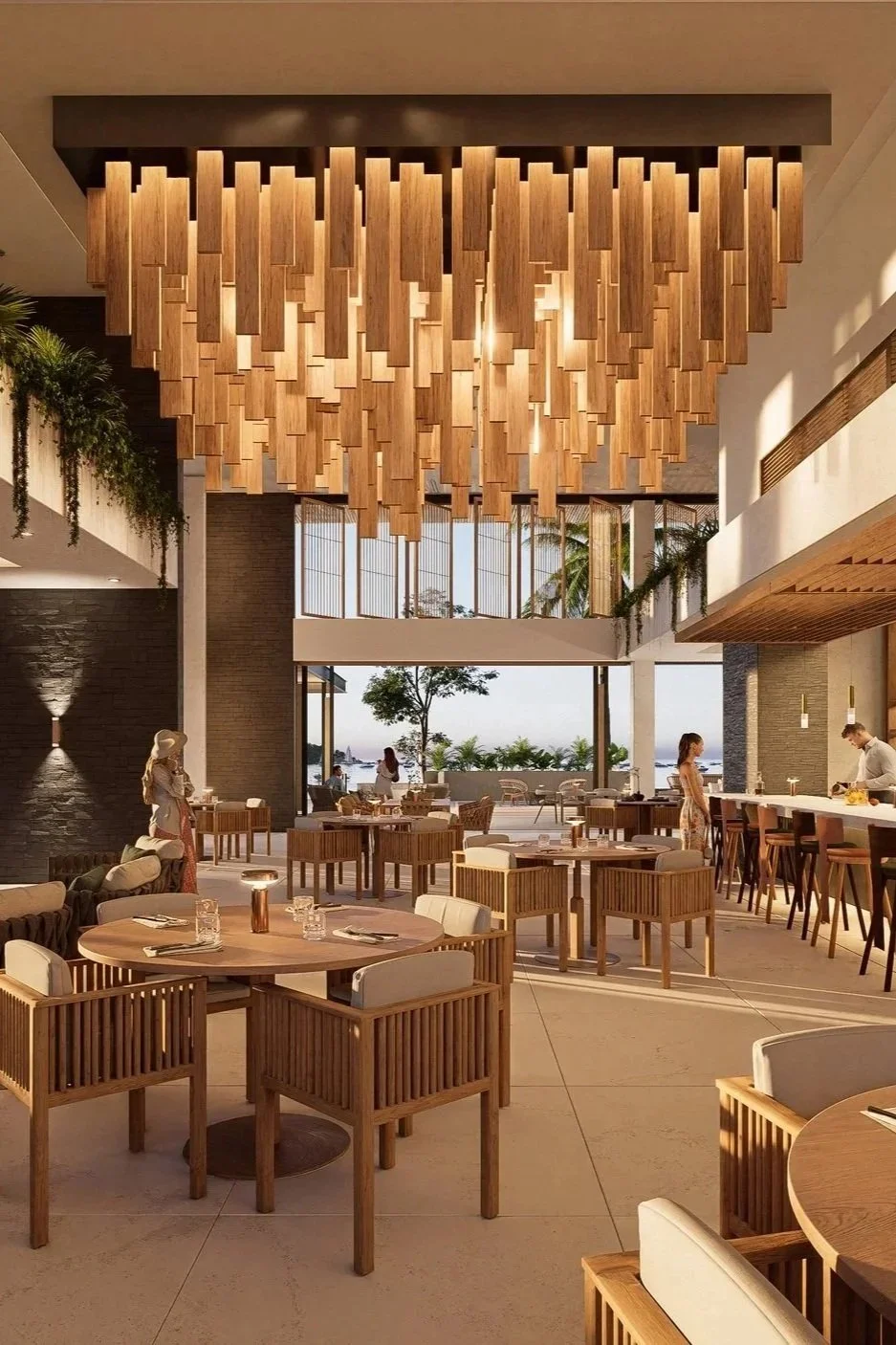
A Nikkei and fusion restaurant in every sense — tradition and innovation, respect and curiosity.
These are the principles that guide every design decision in this project, from its relationship with the context to the choice of materials and the atmosphere it seeks to create..